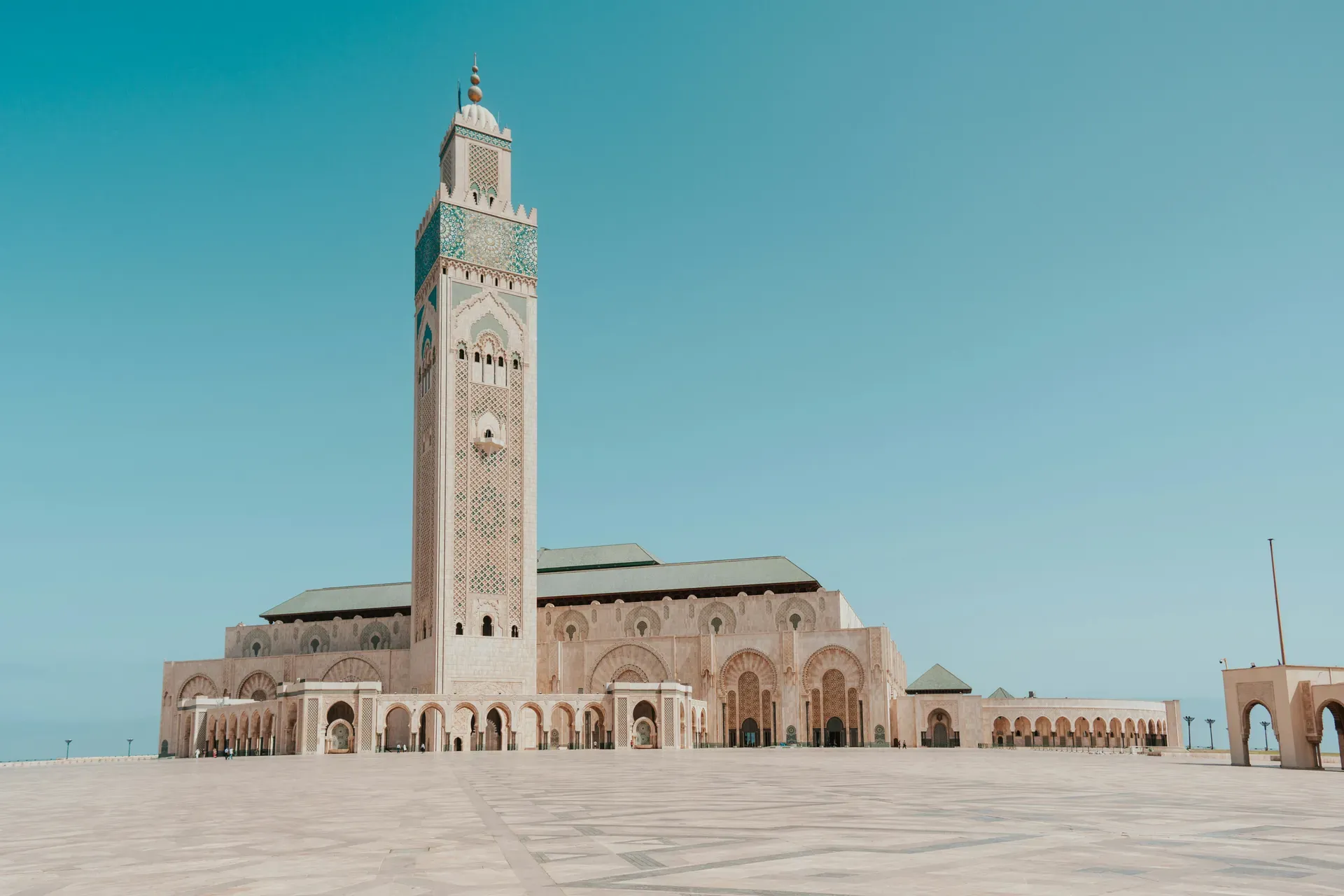
Built directly over the Atlantic Ocean, the Hassan II Mosque features a 210-meter minaret and intricate tilework crafted by 10,000 artisans. As one of the few Moroccan mosques open to non-Muslims, it accommodates up to 105,000 worshippers and contains a massive 1,100-ton retractable cedar roof.
Find Guided ToursThe Hassan II Mosque is a monumental Islamic house of worship situated on a promontory at the northwestern tip of Casablanca. Completed in 1993, it stands as the largest functioning mosque in Africa and the seventh largest in the world. The main building measures 200 meters in length and 100 meters in width. It features a massive prayer hall capable of accommodating 25,000 worshippers, alongside an outdoor plaza that holds an additional 80,000, bringing the total capacity to 105,000.
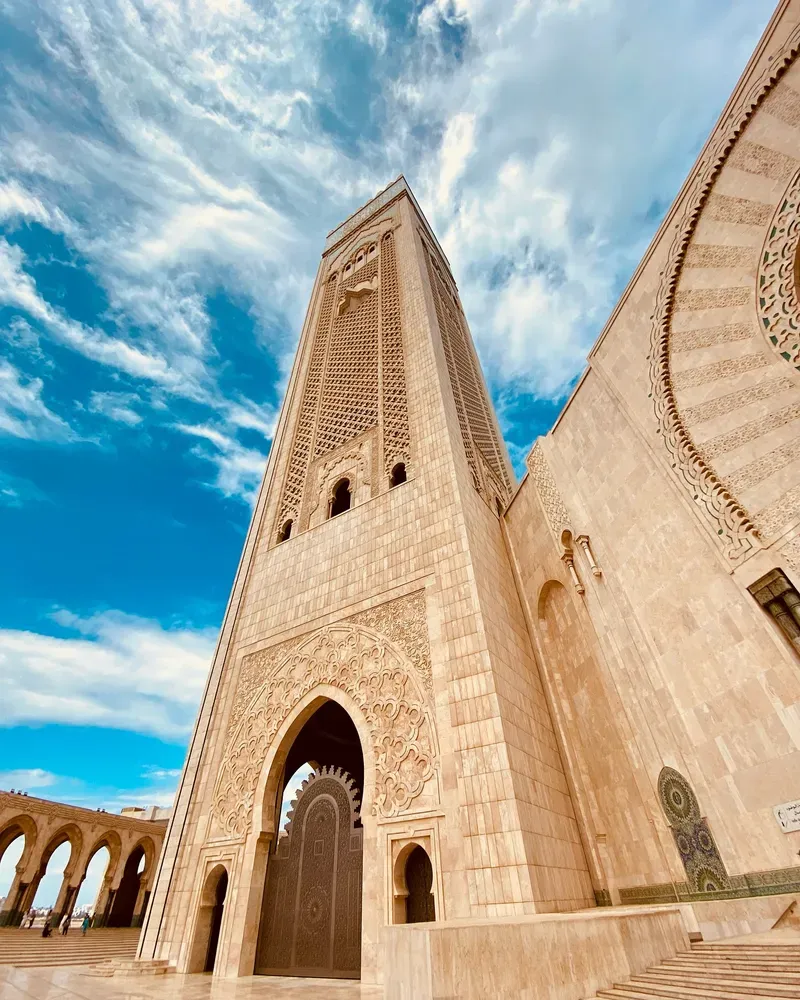
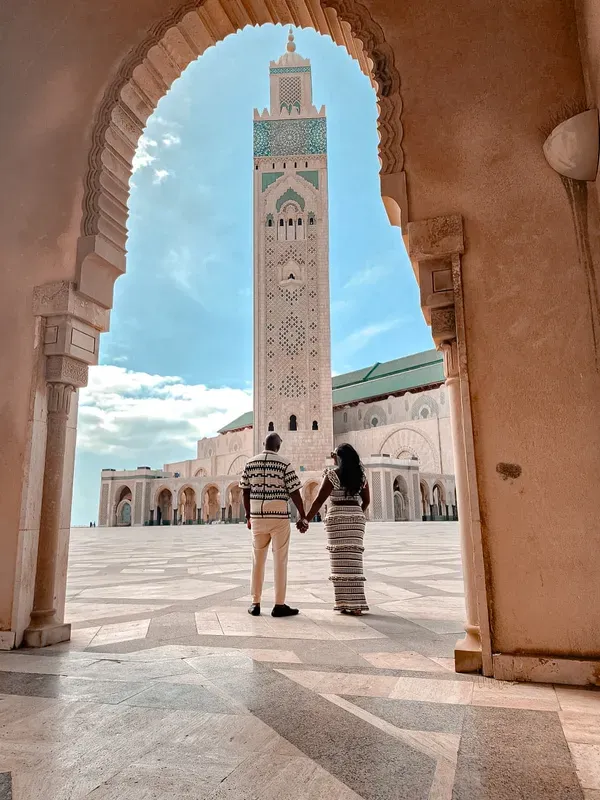
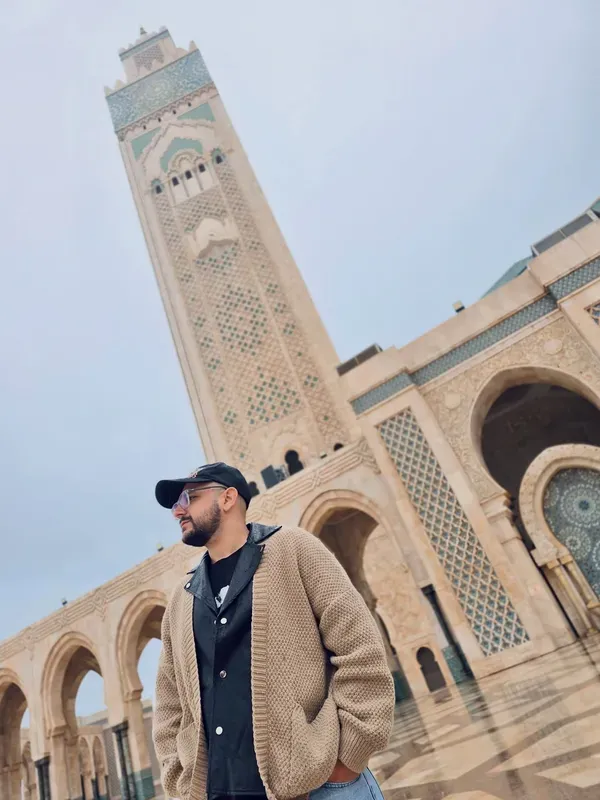
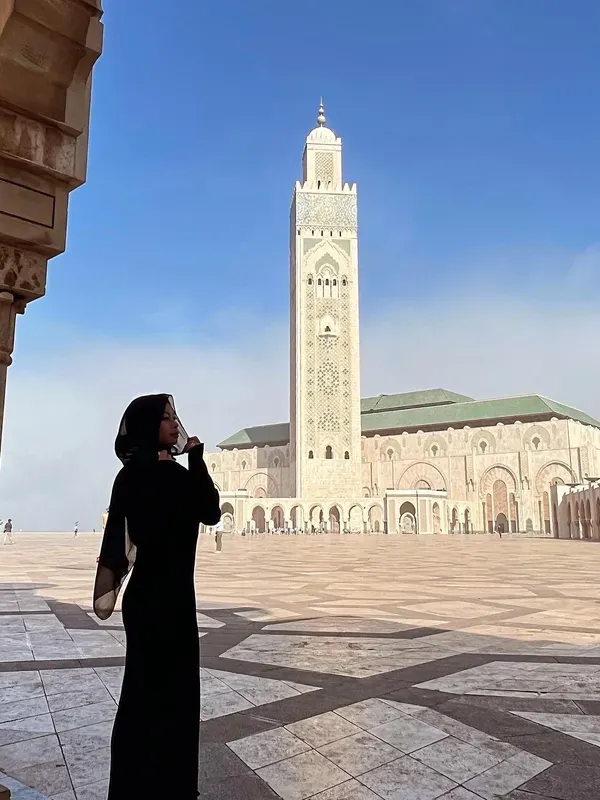
The structure is famous for its unique coastal location. One-third of the mosque is built directly over the Atlantic Ocean, a specific design choice fulfilling the Quranic verse stating "the throne of God was upon the water." Towering above the complex is a 210-meter minaret. Equivalent to a 60-story building, it is the second tallest in the world and is topped with a laser beam that shines 30 kilometers toward Mecca every evening. It is also one of the few mosques in Morocco open to non-Muslim visitors.
King Hassan II commissioned the project to celebrate his 60th birthday. Construction began on July 12, 1986, under the direction of French architect Michel Pinseau. The massive undertaking required a workforce of 10,000 master craftsmen and 2,500 construction workers operating in 24-hour shifts. Together, they assembled a site that cost approximately $800 million USD to complete. Funding for the project came from both the King, who contributed a third of the cost, and a public subscription from 12 million Moroccan citizens.
The mosque was officially inaugurated on August 30, 1993. Today, it serves not only as a functional religious site but as a primary symbol of Moroccan architectural mastery. The blend of enormous scale, traditional artistry, and modern engineering establishes the Hassan II Mosque as the defining landmark of Casablanca.
Discover the full history and cultural significance on our About page.
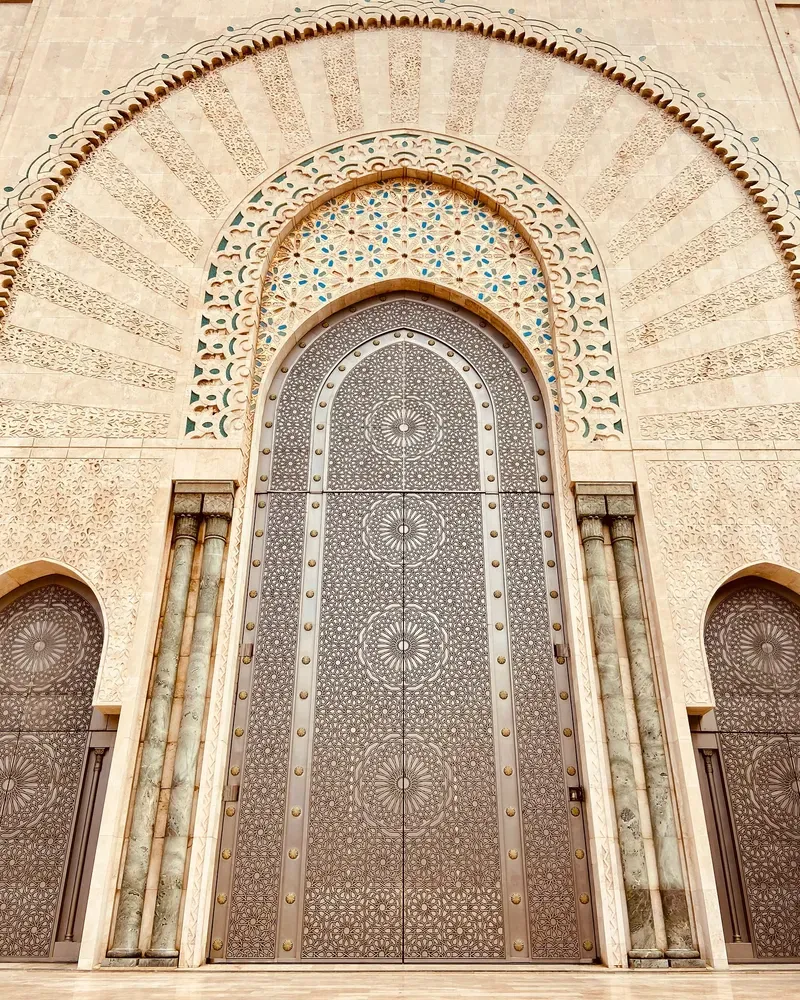
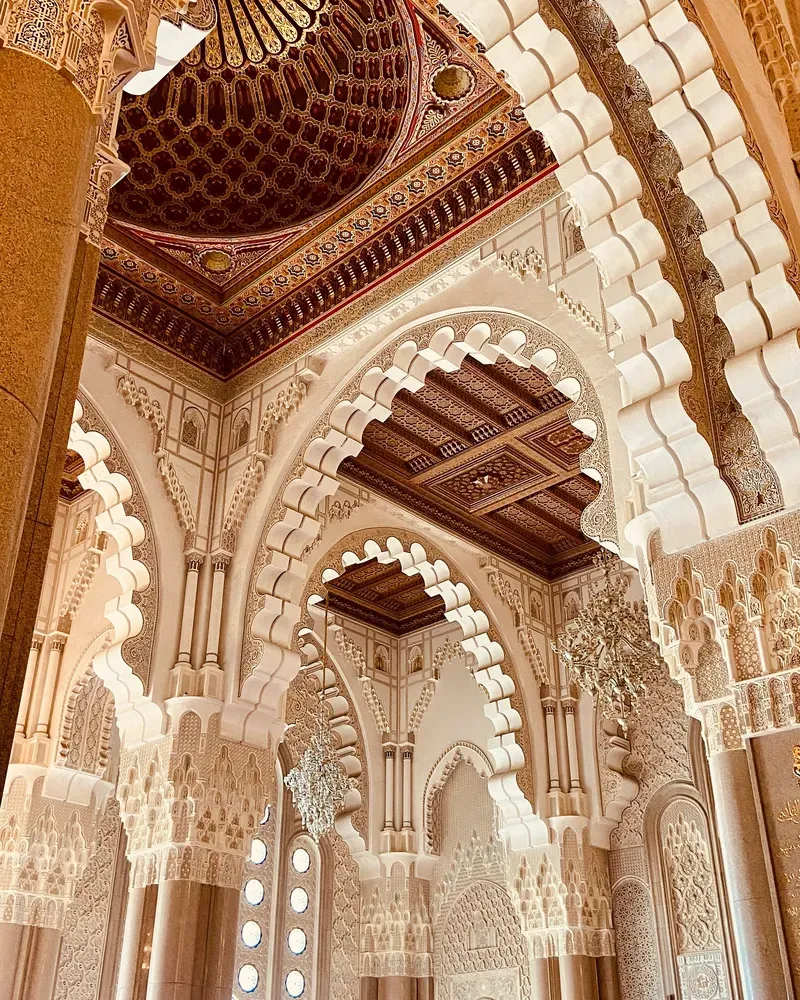
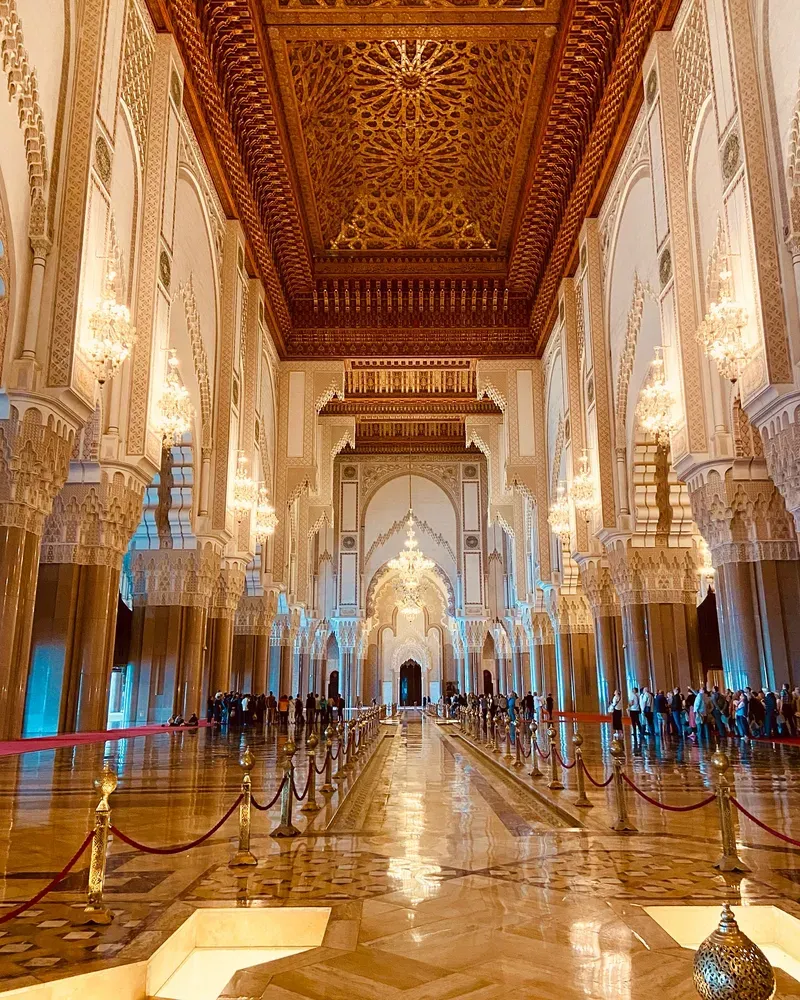
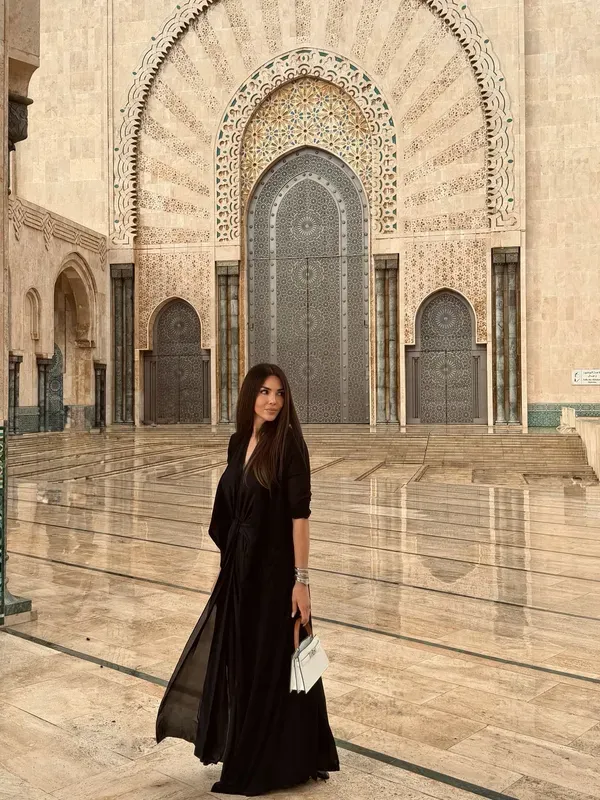
Walk through the main prayer hall to view the work of 10,000 master craftsmen. The interior features over 10,000 square meters of ceramic mosaics arranged in 80 geometric patterns. Look up to spot 57 imported Murano glass chandeliers, with the heaviest weighing 1,200 kilograms.
One-third of the structure extends directly over the sea, fulfilling a specific Quranic verse. During the guided tour, look through designated glass-floored sections to watch the ocean waves crashing beneath the foundations. Massive titanium and brass exterior doors protect the building from the salty coastal air.
The prayer hall is topped by a 1,100-ton cedar wood roof designed to slide open in just five minutes. While it remains closed during most standard tours, observing its intricate woodwork and learning about its mechanics provides a concrete example of the building's 800-million-dollar engineering.
Descend into the mosque's basement to walk through the vast ritual washing area. The hall contains 41 individual marble fountains carved into the shape of lotus flowers. Visitors can observe the exact locations where worshippers prepare themselves before heading upstairs to the main prayer space.
Hand-picked tours with free cancellation and verified reviews
 Free Cancellation 4h 30min
  Free Cancellation
  Free Cancellation 13h
  Free Cancellation 4h 30min
  Free Cancellation 4h 30min
  Free Cancellation
  Free Cancellation
  Free Cancellation
 The optimal time to visit the Hassan II Mosque is between March and June or September and October, when weather is mild and tourist crowds are manageable. Scheduling a morning tour at 09:00 or 10:00 provides the best interior lighting for photography and a quieter environment.
Mild weather and manageable tourist volumes make this an optimal period to visit. The pleasant coastal climate allows for comfortable exploration of the expansive outdoor plaza and minaret exterior.
While June offers mild conditions, July and August are the worst months to visit. High humidity and extreme tourist congestion significantly impact the typical 1.5 to 2.5-hour visit duration.
September and October present excellent touring conditions, characterized by mild weather and reduced crowds. Visitors can comfortably navigate the 500-meter walk from the ticket office to the main entrance.
January and February are highly prone to rain and wind. Atlantic sea spray makes the marble courtyards slippery, and the interior floors become exceptionally cold when walking without shoes.
Guided tours operate Saturday through Thursday at 09:00, 10:00, 11:00, 12:00, 15:00, and 16:00. Friday tours are scheduled for 09:00, 10:00, 15:00, and 16:00, though morning access is often restricted for non-Muslims due to prayer services. During Ramadan, the schedule is drastically shortened, usually limited to 09:00 to 11:00. The mosque interior is closed to tourists during all five daily prayer sessions.
| Category | Price |
|---|---|
| Foreign Adults | 140 MAD (~$14 USD) |
| Foreign Students & Moroccan Residents | 70 MAD |
| Children (over 6) | 30 MAD |
| Children (under 6) | Free |
Non-Muslims must join an official guided tour to enter the mosque interior. Tickets must be purchased at the onsite museum office; arriving 30 to 45 minutes before your desired tour time is recommended. Access to the exterior grounds and sea wall is free.
For complete schedules and ticket prices, visit our Hours & Fees page.
Reaching the Hassan II Mosque is straightforward from most central points in Casablanca, with options ranging from rail connections to local taxis. The site sits prominently on a promontory at the northwestern tip of the city, making it a highly visible landmark to navigate toward.
📍 Boulevard Sidi Mohammed Ben Abdellah, Casablanca, Morocco
Small red taxis provide the most direct transport from the Casablanca city center to the mosque. The ride covers three to four kilometers and drops you right at the complex. Always verify that the driver turns on the meter before departing. If the meter is unavailable, negotiate and agree upon the fare before getting inside the vehicle.
Travelers arriving at Casa Voyageurs Station can utilize the city tram network for a cost-effective transit method. Board the T1 line and ride it until you reach the Place des Nations Unies stop. From this plaza, the mosque is located roughly two kilometers away. You can complete the final stretch via a short taxi ride or a twenty-minute walk.
Visitors starting at the Casa Port Train Station can easily reach the mosque on foot. The two-kilometer route is entirely flat and follows the coastline along Boulevard Sidi Mohammed Ben Abdellah. This path provides excellent ocean views as you approach the massive structure. Navigating is simple since the 210-meter minaret remains visible throughout the entire walk.
Passengers landing at Mohammed V Airport can connect directly to the city utilizing the national rail service. The airport train covers the 35-kilometer distance and terminates at the Casa Port station. Once you exit the train station, the mosque is easily accessible. You can either hire a local taxi or walk the remaining two kilometers along the coast.
For detailed transport options and routes, visit our Directions page.
Morning tours at 9:00 or 10:00 AM provide the best soft lighting for interior photography. You should arrive at the museum building ticket office 30 to 45 minutes before your preferred time. This allows you to secure your spot and avoid large tour bus crowds.
You must remove your shoes before entering the prayer hall. Staff provide plastic bags so you can carry your footwear during the 45-minute guided tour. Pack a pair of thick socks, as the marble floors get extremely cold during the winter months.
Non-Muslims cannot enter the interior on Friday mornings. The first Friday tour usually begins after 2:00 PM. During Ramadan, hours are heavily restricted and often end by 11:00 AM. Always verify the current schedule on the official Fondation de la Mosquée Hassan II website before visiting.
Both men and women must cover their shoulders and knees to enter the complex. Women do not strictly need a headscarf but should carry one just in case. Security guards will also stop public displays of affection like hugging or holding hands out of respect for the religious site.
Ignore individuals outside the complex offering private tours or claiming the mosque is closed. You must purchase tickets directly at the onsite museum office for the official guided tours. If you are on a tight budget, walking the exterior grounds and sea wall is completely free.
The mosque sits on a promontory over the Atlantic Ocean, and sea spray frequently coats the exterior. This moisture makes the vast marble courtyards extremely slippery when wet. Walk with caution across these surfaces. You will also cover about 500 meters walking from the ticket office to the entrance.
This venue is a recreation of the famous bar from the 1942 film Casablanca. It provides visitors with a nostalgic jazz-age atmosphere just a short ride from the mosque.
This beachfront promenade is lined with high-end restaurants and beach clubs. It also provides access to the Morocco Mall, giving visitors an opportunity for upscale shopping by the ocean.
The historic heart of the city provides a traditional shopping experience. It is notably less touristy than the markets of Marrakech, allowing for a realistic look at local commerce.
Read what travelers share about their experience visiting Hassan II Mosque — from practical tips to personal highlights.
Yes, it is one of the few mosques in Morocco open to non-Muslims. However, you must join a guided tour to enter the interior, and tickets must be purchased at the onsite museum office without the need for advance permits.
The entry fee for foreign adults is 140 MAD, which is roughly $14 USD. Foreign students and Moroccan residents pay 70 MAD, tickets for children over six cost 30 MAD, and children under six enter for free.
Guided tours run Saturday through Thursday at 09:00, 10:00, 11:00, 12:00, 15:00, and 16:00. Friday tours are limited to 09:00, 10:00, 15:00, and 16:00, as the interior is closed to tourists during Friday mornings. Hours are also reduced to morning slots between 09:00 and 11:00 during Ramadan.
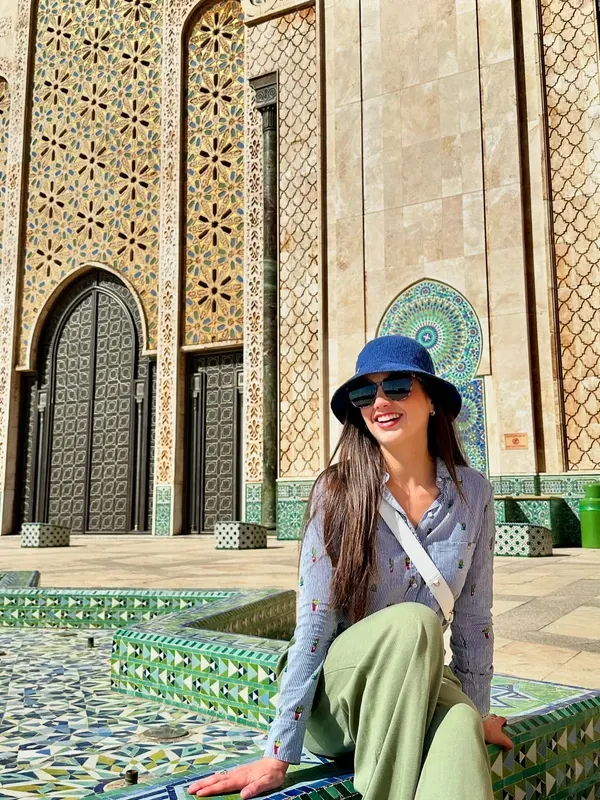
Both men and women must wear modest clothing that covers their shoulders and knees. Women are not strictly required to wear a headscarf but are encouraged to carry one. You must remove your shoes before entering, so wearing socks is highly recommended since the marble floors can get very cold.
The most convenient option is taking a red Petit Taxi, which takes 10 to 15 minutes from the center and costs 15 to 30 MAD. Alternatively, you can take the T1 tram to Place des Nations Unies for 8 MAD and walk 20 minutes, or walk 2 kilometers along the coast from the Casa Port train station.
Yes, the main prayer hall and courtyard are equipped with ramps and elevators for wheelchair users. The terrain is mostly flat marble, making it suitable for mobility-impaired visitors, though the walking distance from the ticket office to the entrance is approximately 500 meters.
A typical visit takes between 1.5 and 2.5 hours. This includes the mandatory 45-minute guided tour, plus additional time to explore the onsite museum and take photographs of the exterior grounds.
Advance bookings are not required. You can arrive at the ticket office in the museum building 30 to 45 minutes before your desired tour time to purchase a ticket and secure a spot before large tour bus groups arrive.
Browse verified tours with free cancellation and instant confirmation.
Find Tours